
There's a specific kind of exhaustion that sleep doesn't touch. You've been pouring into everyone else for so long that you can't remember the last time anyone checked whether your own cup was still full. You're doing everything you're supposed to do. Showing up, giving, carrying, and it still isn't enough to make the ground under you feel steady.

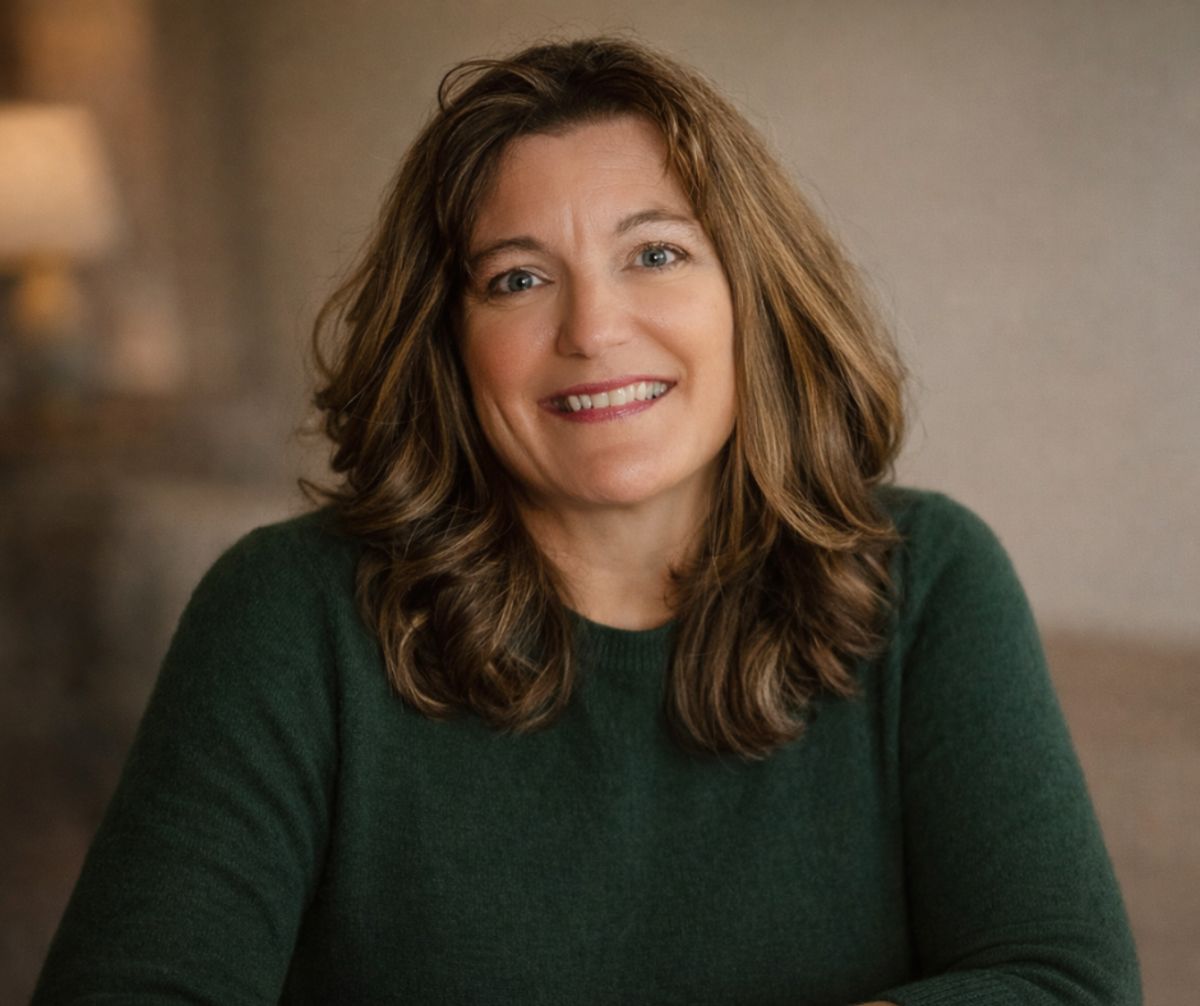
Shannon Liedtke | Nature as Medicine
If you're here because you searched some version of "why am I so exhausted even though I'm doing everything right," I want you to know two things before anything else:
Nothing is wrong with you.
You are not the only one standing exactly where you're standing right now.
Why did I leave hospice nursing to become a nature-based coach?
I'm Shannon, a hospice nurse turned nature-based coach, and I know this exhaustion firsthand. I spent years sitting with dying patients and their families while also parenting a child with unique needs, carrying more than I had the capacity to hold.
The turning point came from an unexpected place. I was in more pain than I'd been in since I gave birth twelve years earlier, and that comparison changed everything:
What if this wasn't a collapse?
What if it were labor?
What if this pain could produce something breathtaking, the same way that pain once had?
It took time. It took a lot of tears. But something was being born.
Is my exhaustion a sign that something is wrong with me?
If you're a caring professional reading this, you already know how to do everything right.
You show up.
You give.
You carry.
That's not the problem, and burnout isn't proof that you're failing at it.
For a lot of women, this moment lands right in midlife, just as perimenopause is quietly shifting your hormonal chemistry and everything that used to feel solid starts to feel unfamiliar. That timing isn't a coincidence; it feels so disorienting.
What I want you to hear is this:
The pain of depletion isn't a sign that something is broken in you. It's often the labor pangs of a new you trying to arrive.
Burnout isn't a personal failure; it's an opportunity for awakening, even though it rarely feels that way while you're inside it.
This isn't just something I believe from my own experience. Research on burnout among healthcare professionals consistently points to the same pattern I lived through. Chronic stress creates real dysregulation in the nervous system and hormonal pathways, not just a feeling of being tired. Your body isn't overreacting. It's responding accurately to what it's been carrying.
How is nature-based coaching different from just walking in nature?
This is the biggest misconception I run into, so let me clear it up directly:
Nature-based coaching is not about going outside to feel a little better for an afternoon.
It's about connecting with the living community around us, the trees, the watershed, the non-human neighbors who start to feel like family, to get perspective. It's about stepping outside the human cultural story we're stuck in long enough to actually see it. It's about reconsidering the rules and roles we've taken for granted, so there's finally room to imagine doing things differently.
I think of the natural world as a circle of aunties sitting just outside the room where the hard work of change is happening. They don't fix it for you. They witness it with you.
That's the same way I show up with clients. I think of myself less like a guide leading you somewhere and more like a midwife. I sit with you and bear witness to the hard work you're doing. I remind you to trust the process on the days you lose faith in the change you're making.
I stay attuned, I cry with you when it's warranted, and I shape my approach around what you actually need:
Cheerleading
Encouraging
Offering Perspective
Celebrating you as you do the work of becoming. Midlife isn't a decline. It's an awakening.
Can forest therapy actually help me heal from burnout?
Yes. This isn't just a nice idea; it's an active field of research, including work from Harvard.
Dr. Susan Abookire, a Harvard Medical School professor and certified forest therapy guide, now leads forest therapy sessions for physicians and medical students at Harvard's Arnold Arboretum to help them process caregiving burnout before it takes hold. She's someone I've learned from directly, and her work is also covered by Harvard Health Publishing.
Research on forest-based practice points to recovery across:
Depression
Anxiety
Chronic Pain
ADHD
And occupational stress injury, the clinical term for burnout. (More on the specific physiological numbers in a moment.)
None of this replaces your own medical care. It does mean what I do with clients isn't just a feeling; it's measurable. For a deeper dive, Dr. Abookire's book, Nature as Medicine, is a great next step.
You can download it here: naturesystemsinstitute.com/ebook.
Underneath the data is something research can't fully capture, a kinship with the living world, understood across many indigenous cultures, that's harder to explain than a cortisol number, but just as real. It's the perspective I work from.
Is forest therapy right for burned-out caregivers?
This work is for professionals in caregiving roles:
Nurses
Therapists
Coaches
Caregivers of every kind.
People who have recognized they've been carrying everyone else for far too long without tending to themselves. If you're exhausted, used up, feeling trapped, or starting to feel resentment creep in toward a world that's taken your good care for granted, this is written for you.
You've probably been told you can't pour from an empty cup. I won't say that to you. Nobody ever explains how to fill a cup that everyone else is constantly drinking from, and that's exactly the work.
Does spending time in nature actually lower cortisol and blood pressure?
One stat worth sitting with: research on forest environments has found lower cortisol, lower blood pressure, and greater natural killer cell activity in people who spend time immersed in nature compared to those in city environments — findings that led Dr. Qing Li's research team in Japan to establish an entire interdisciplinary field called Forest Medicine. This isn't folk wisdom. It's measurable.
How can I work with Shannon Liedtke at Fern Kingdom Forest Therapy?
If any of this feels familiar, I'd love to connect with you. I work with caring professionals and caregivers who are ready to explore what nature-based coaching can offer, using forests, parks, and other natural spaces that this work is built around.
You can learn more about my approach, my background, and how to reach out for a first conversation at fernkingdom.com.

How do I find a nature-based coach or forest therapy practitioner near me?
If you're a nurse, therapist, coach, or caregiver and what you've just read feels familiar, you don't have to figure this out alone, and you don't need to find a nature-based coach through guesswork.
Cash-based and client-centered practitioners across the country, including specialists in nature-based and trauma-informed coaching, are searchable by location and specialty at how.healthcare. Every practitioner listed has been reviewed and approved.
Frequently Asked Questions
Is burnout a sign that something is wrong with me?
No. Exhaustion at this level is usually your body responding honestly to what it's been carrying, not evidence that you're failing.
What is nature-based coaching?
A practice of connecting with the living world to gain perspective and reconsider inherited rules and roles, not simply spending time outdoors.
Is forest therapy right for caregiving professionals?
Yes. It's built specifically for nurses, therapists, coaches, and anyone in a caregiving role who has been pouring into others without tending to themselves.
What can I do today to start healing from burnout?
Here's your one, low-pressure action: the next time you feel that familiar wave of depletion, go outside, not to walk fast or get somewhere, but to stand still for five minutes and notice one living thing near you.
A tree.
A bird.
The sound of wind.
That's the beginning of the relationship this work is built on.
Sources
Harvard Medicine Magazine — "Walk in the Woods May Boost Mental Health"
Harvard Health Publishing — "Can Forest Therapy Enhance Health and Well-Being?"
Li, Q. — "Effects of Forest Environment (Shinrin-yoku/Forest Bathing) on Health Promotion and Disease Prevention — the Establishment of 'Forest Medicine'", Environmental Health and Preventive Medicine
Abookire, S. — Nature as Medicine
Want more articles like this one: practical, patient-first guidance on cash-based care, written by the practitioners actually providing it? Subscribe to get them as they're published.

The Centered Care Directory connects patients with cash-based and client-centered practitioners across the United States. Search by location and specialty at how.healthcare.
Suzy Wraines | Founder, Centered Care Directory | Health Over Wealth in the US
